
 Mohamed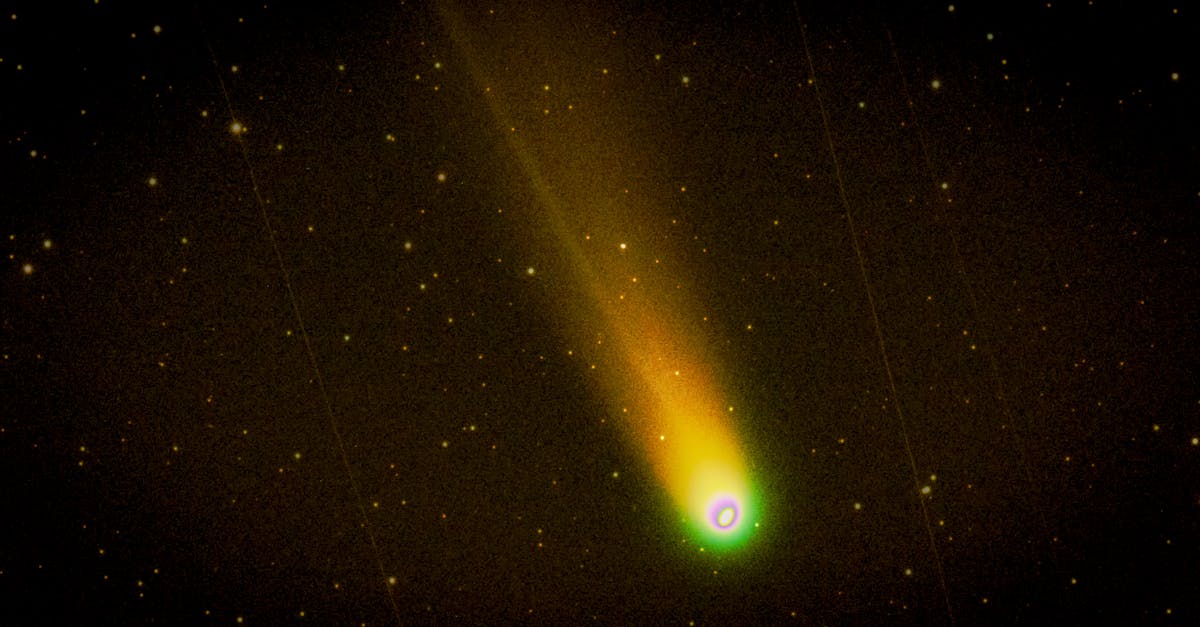
NASA tracks interstellar comet 3I/‘Atlas’, providing fresh insights into its journey and what this tells us about objects from beyond the solar system.
NASA’s active tracking and study of the interstellar comet 3I/‘Atlas’ has brought renewed excitement to the astronomical community. This week, new observations and analyses have illuminated details about its origin, path, and composition, offering valuable data about objects that come from outside our solar system.
## Why Is 3I/‘Atlas’ Trending This Week?
Interest in 3I/‘Atlas’ surged following NASA’s recent data releases on its trajectory and physical characteristics. As one of the very few known interstellar visitors—the third after 1I/ʻOumuamua and 2I/Borisov—3I/‘Atlas’ continues to captivate both scientists and the public, especially as improved observations have become available.
## The Unique Path of Interstellar Comet 3I/‘Atlas’
3I/‘Atlas’ travels on a hyperbolic orbit, meaning it is not bound to our Sun’s gravity but instead originated outside our solar system. NASA’s precise tracking has mapped its rapid transit through the inner solar system, revealing information about its speed, trajectory, and interaction with solar radiation.
## NASA’s Observations and Techniques
Using a combination of ground-based telescopes and space observatories, NASA has gathered detailed spectral and imaging data of 3I/‘Atlas’. These observations help determine its composition, size, and activity level, such as the jets of gas and dust typical of cometary bodies.
## Scientific Insights: Composition and Origins
Preliminary analyses suggest that 3I/‘Atlas’ contains compounds not commonly found in typical solar system comets, hinting at the diverse chemical environments that exist around other stars. These findings help astronomers understand the processes of planetary system formation and the distribution of organic materials in the galaxy.
## Broader Implications for Astronomy and Planetary Science
Studying interstellar comets like 3I/‘Atlas’ provides a unique opportunity to directly sample material from beyond our solar neighborhood. This opens a new window into comparative planetology and astrochemistry by highlighting differences and similarities between different star systems.
## What’s Next in the Study of 3I/‘Atlas’?
As 3I/‘Atlas’ continues its journey out of the solar system, NASA and the global scientific community aim to finalize data collection while it remains observable. Future missions and telescopes with enhanced sensitivity could capture similar interstellar visitors, further expanding our knowledge.
## Conclusion
NASA’s tracking of interstellar comet 3I/‘Atlas’ underscores the growing importance of studying cosmic visitors to our solar system. These insights not only enhance our understanding of the universe but also inspire ongoing exploration and curiosity about what lies beyond our celestial neighborhood.
For those fascinated by the cosmos, following NASA’s updates on 3I/‘Atlas’ offers a window into the dynamic and interconnected nature of the galaxy. Stay informed about this and other space discoveries to keep pace with humanity’s voyage into interstellar frontiers.