
 Mohamed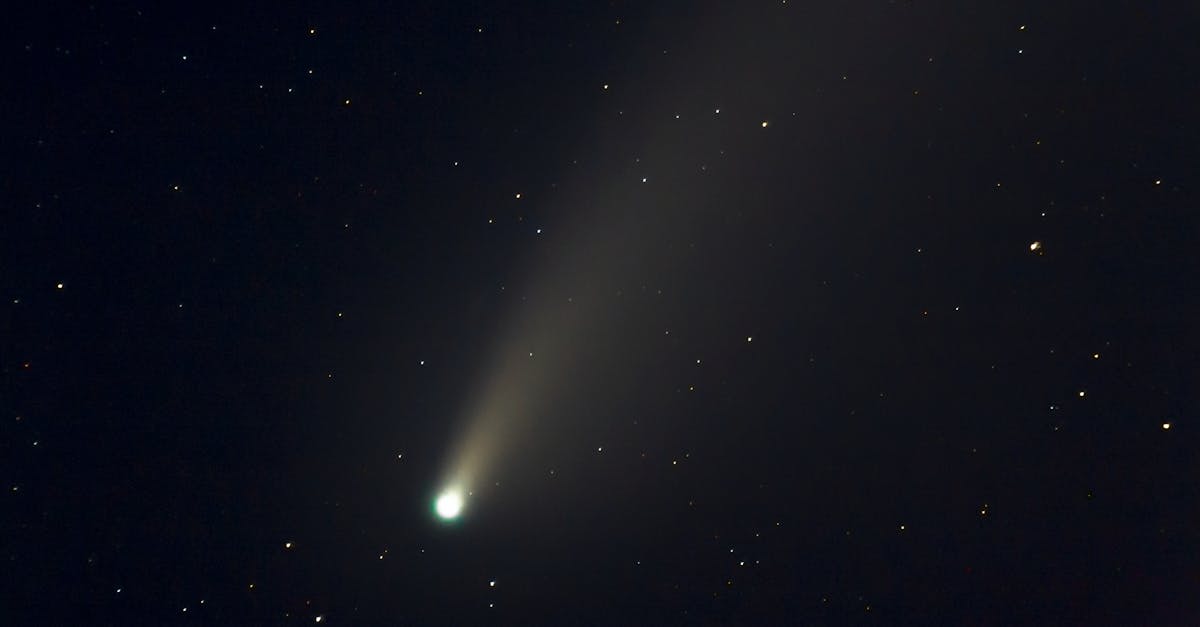
NASA confirms interstellar comet 3I/‘Atlas’ this week, offering fresh insights into objects from beyond our solar system and what scientists are currently learning.
NASA has recently confirmed the interstellar comet 3I/‘Atlas’, marking a significant development in the study of objects originating beyond our solar system. This announcement has captured scientific and public attention alike, sparking curiosity about what this exotic visitor can reveal about the cosmos.
## Why Is 3I/‘Atlas’ Trending This Week?
The confirmation by NASA that 3I/‘Atlas’ is an interstellar comet has reignited interest in interstellar objects, a field that has grown considerably since the discovery of 1I/ʻOumuamua in 2017. This week’s trending news reflects not just the comet’s identification but the subsequent observational campaigns and analysis that offer new clues about materials from outside our solar neighborhood.
## What Is Interstellar Comet 3I/‘Atlas’?
3I/‘Atlas’ is the third known interstellar object to pass through our solar system, distinct in its comet-like activity. Unlike asteroids, comets exhibit characteristic gas and dust tails as volatile substances sublimate when heated by the Sun. Its trajectory showed it entered from beyond our solar system, confirming its interstellar origin.
## NASA’s Role in Confirming 3I/‘Atlas’
NASA’s telescopes and observational assets have played a crucial role in tracking 3I/‘Atlas’. The agency’s confirmation is based on precise measurements of the object’s hyperbolic orbit—indicative that it’s not gravitationally bound to the Sun but instead a visitor from interstellar space.
## What Scientists Are Discovering Now
Ongoing observations focus on analyzing the comet’s composition, behavior, and origin. Scientists are particularly interested in studying the materials that make up 3I/‘Atlas’ to compare them with those of comets and asteroids native to our solar system.
Early spectroscopic data suggest differences in chemical makeup, which may give insights into the conditions and processes in other star systems. Such data help astronomers better understand planet formation and the distribution of organic compounds in the galaxy.
## Implications for Astrophysics and Planetary Science
Discovering and studying interstellar objects like 3I/‘Atlas’ offers a rare opportunity to sample material from outside the solar system without leaving Earth. It expands our knowledge of the types of building blocks that exist in other parts of the galaxy.
Researchers are hopeful that continued monitoring of 3I/‘Atlas’ and similar objects will refine models of interstellar object populations, their frequency, and their potential role in delivering complex molecules across stellar neighborhoods.
## Looking Forward: What’s Next for 3I/‘Atlas’ Research?
As 3I/‘Atlas’ moves away from the Sun, its brightness will fade, posing challenges for observation. However, upcoming observations by space-based telescopes and coordinated global efforts aim to maximize data collection while the comet remains accessible.
The broader scientific community is also preparing for future discoveries, anticipating that advancements in telescope sensitivity will increase our ability to detect and study interstellar visitors.
## Final Thoughts
The confirmation of interstellar comet 3I/‘Atlas’ by NASA marks a thrilling chapter in space exploration and astronomy. Each interstellar object offers unique insights into the universe beyond our solar system, enriching our understanding of the cosmos.
Stay tuned for further developments as scientists continue to unlock the mysteries of 3I/‘Atlas’ and pave the way for new discoveries from the depths of interstellar space.