 Mohamed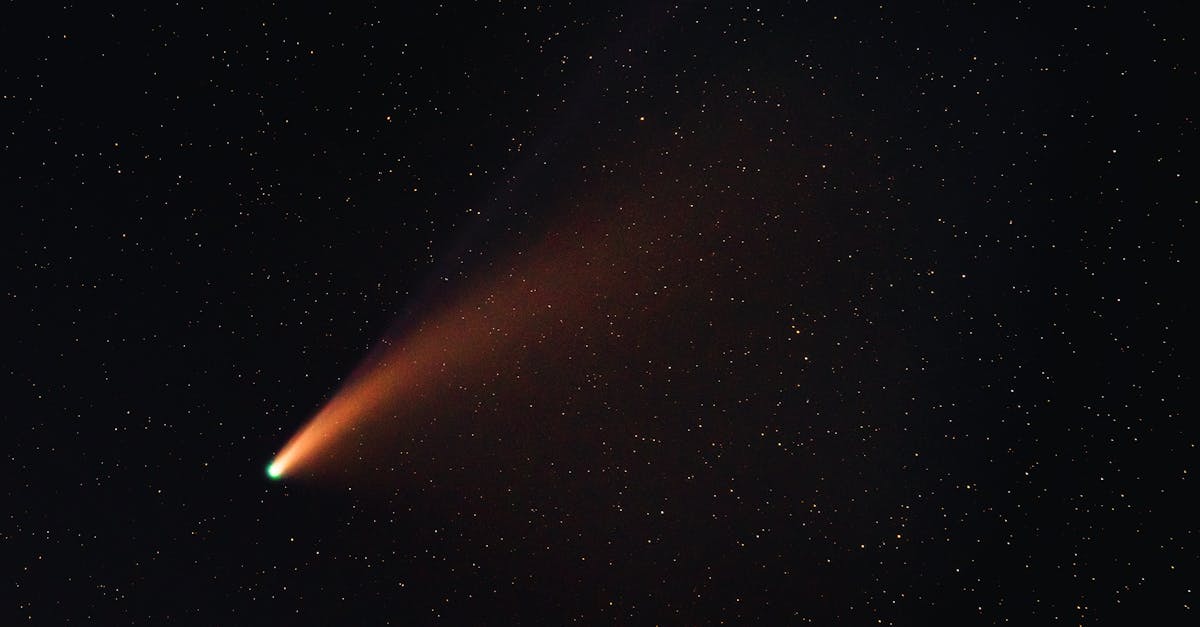
Recent studies of interstellar comet 3I/ATLAS uncover fresh insights into its composition and origins, shedding light on the mysteries of the cosmos this week.
## Interstellar Comet 3I/ATLAS: A Cosmic Visitor Unveiling Secrets
This week, astronomers around the world are buzzing with excitement as new findings about the interstellar comet 3I/ATLAS have emerged. Discovered just over a year ago, 3I/ATLAS continues to provide valuable data that deepen our understanding of objects from beyond our solar system.
Unlike typical comets born within our cosmic neighborhood, interstellar poachers like 3I/ATLAS carry unique chemical signatures that tell stories of their formation in distant star systems. Researchers have recently analyzed fresh observations made in the past month, revealing surprising details about its composition and behavior.
## Why Is 3I/ATLAS Trending Now?
Interest in 3I/ATLAS reignited this week following several international observatories sharing updated spectroscopic data. These observations, captured within the last 30 days, show unusual volatile activity and an array of organic compounds previously unseen in interstellar objects. The comet’s shifting brightness patterns and gas emissions have sparked new debates about where and how it formed in the galaxy.
## What New Clues Has 3I/ATLAS Offered About Cosmic Origins?
New data indicate that 3I/ATLAS possesses a high concentration of complex organic molecules, such as hydrocarbons, suggesting that key ingredients for life may be widespread in the galaxy. This adds to growing evidence that building blocks of life travel vast distances embedded within cometary bodies.
Additionally, 3I/ATLAS exhibits volatile outgassing behavior different from solar system comets, implying it formed in a colder, more distant part of its home system. Such insights help astronomers refine models of planet and comet formation across different star systems.
Dr. Maya Chen, a leading astrophysicist studying the comet, remarked, “Each interstellar visitor like 3I/ATLAS is a natural probe, carrying clues to the conditions of far-off stellar nurseries. Our latest measurements deepen our understanding of the galaxy’s diverse chemical makeup.”
## How Does 3I/ATLAS Compare to Other Interstellar Objects?
Prior interstellar visitors, such as ’Oumuamua and 2I/Borisov, revealed peculiar characteristics – ’Oumuamua’s asteroid-like shape and 2I/Borisov’s cometary activity. 3I/ATLAS combines traits of both, presenting significant gas emission alongside unusual brightness variations. This duality helps scientists broaden classifications and understand the diversity of objects wandering between stars.
## What This Means for Future Interstellar Research
The recent discoveries underscore the importance of rapid-response observations as interstellar objects transit the solar system quickly. Astronomers emphasize enhanced global cooperation and improved telescope networks to catch future visitors early.
Ongoing missions and next-generation telescopes may soon offer unprecedented analysis capabilities, allowing for in-depth chemical and isotopic assessments directly linked to early stellar and planetary evolution.
## Public Engagement and Educational Impact
The revelations about 3I/ATLAS have captivated science enthusiasts and the general public alike. Social media platforms and educational websites are actively sharing visuals and explanations, turning complex astrophysics into accessible stories about cosmic origins and exploration.
## Looking Ahead: Tracking 3I/ATLAS’s Journey
Although 3I/ATLAS is rapidly departing our solar neighborhood on a hyperbolic trajectory, astronomers are committed to monitoring it as long as possible. Every bit of data collected contributes to unraveling the mysteries of our galactic environment.
—
The interstellar comet 3I/ATLAS continues to be a remarkable messenger from afar, enriching humanity’s understanding of the universe. Stay tuned to scientific channels for the latest updates and discoveries from this extraordinary cosmic visitor.
Explore more about 3I/ATLAS and the wonders of interstellar space today!